Our Blog

by Admin
|

Dec 10, 2025
7 Mistakes That Damage Windows During Cleaning
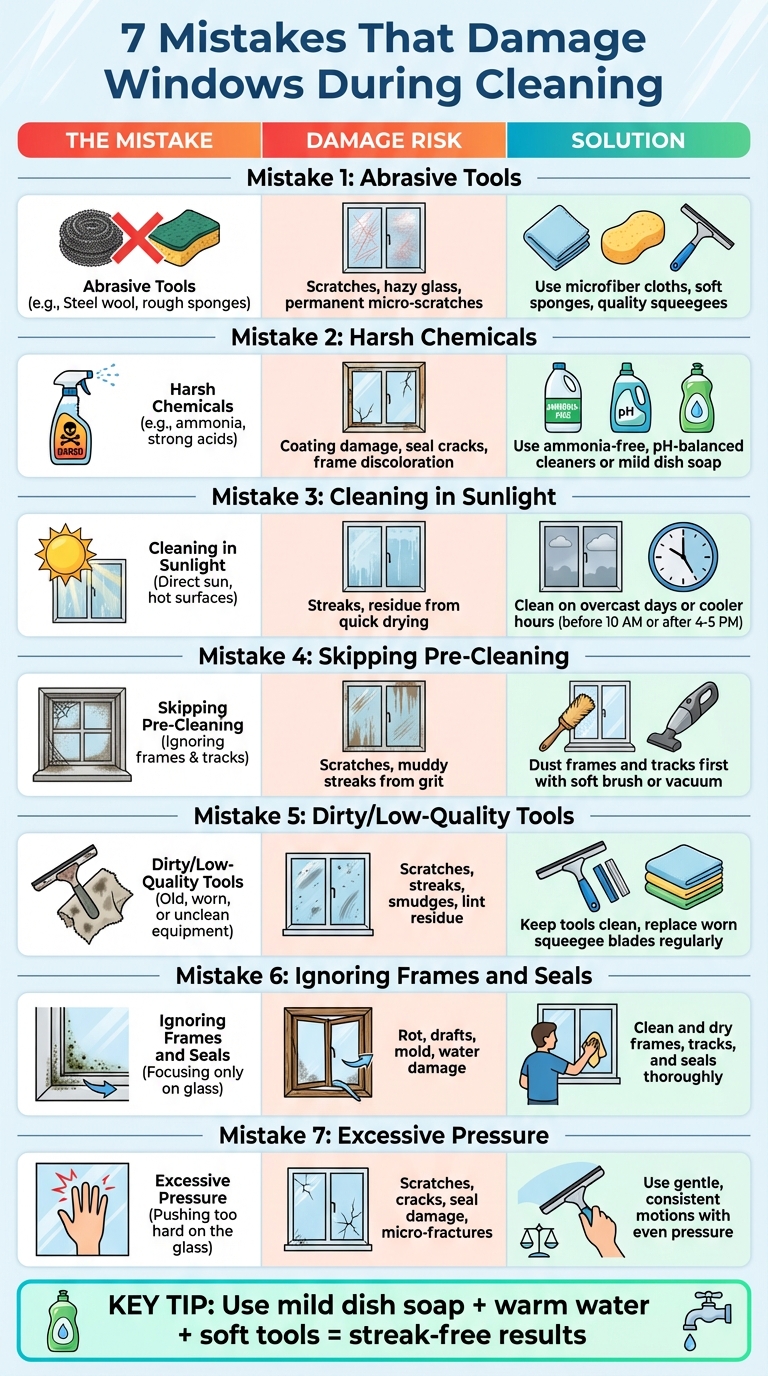
When cleaning your windows, simple mistakes can cause lasting damage. Scratches, streaks, and even structural issues can result from using the wrong tools, harsh chemicals, or poor techniques. Here's what you need to know:
- Avoid abrasive tools like steel wool or rough sponges - they scratch glass and coatings.
- Steer clear of harsh cleaners like ammonia or bleach, which can damage glass, seals, and frames.
- Don’t clean in direct sunlight - it causes streaks and residue due to quick drying.
- Pre-clean frames and tracks to prevent grit from scratching the glass.
- Use clean, high-quality tools like microfiber cloths and squeegees to avoid spreading dirt.
- Don’t neglect frames, tracks, and seals - moisture and debris can lead to rot and drafts.
- Apply gentle pressure and avoid aggressive motions to prevent scratches and cracks.
Key Tip: Use mild dish soap, warm water, and soft tools for safe, streak-free results. For tough spots, professional help is often the best choice.
| Mistake | Damage Risk | Solution |
|---|---|---|
| Abrasive tools | Scratches, hazy glass | Use microfiber cloths, soft sponges |
| Harsh chemicals | Coating damage, seal cracks | Use ammonia-free, pH-balanced cleaners |
| Cleaning in sunlight | Streaks, residue | Clean on overcast days or cooler hours |
| Skipping pre-cleaning | Scratches, muddy streaks | Dust frames and tracks first |
| Dirty or low-quality tools | Scratches, streaks, smudges | Keep tools clean and replace worn ones |
| Ignoring frames and seals | Rot, drafts, mold | Clean and dry frames and seals |
| Excessive pressure | Scratches, cracks, seal damage | Use gentle, consistent motions |
Taking care of your windows with the right methods and tools ensures they stay clear, functional, and long-lasting. Simple adjustments can save you from costly repairs down the road.
7 Window Cleaning Mistakes: Damage Risks and Solutions Guide
Top 3 Window Cleaning Mistakes Made By Newbies
1. Using Abrasive Tools That Scratch Glass
Using the wrong tools on glass - like steel wool, scouring pads, scrub brushes, or even certain paper towels - can leave behind permanent micro-scratches[1][3]. These materials, often harder than glass, act like sandpaper, cutting shallow grooves into the surface. While a single scratch might seem minor, repeated use can create a hazy, dull finish as light reflects off the accumulated imperfections.
People often turn to these abrasive tools for tough spots like paint overspray, hard water stains, tape residue, or bug splatter. However, professional cleaners have observed how using something like a green scouring pad on patio doors can leave a cloudy, fogged appearance that resists further cleaning. On modern insulated or low-E windows, these aggressive methods can even damage protective coatings and potentially void the manufacturer’s warranty.
To avoid scratching, experts recommend using microfiber cloths, soft non-abrasive sponges, and quality squeegees. For stubborn debris, soaking the area with warm water and mild dish soap can loosen buildup, allowing for gentle removal with a soft cloth rather than aggressive scrubbing. When basic methods aren’t enough, it’s better to call in professionals who are equipped to handle the job safely.
For specialty glass with heavy buildup, professional help is the safest option. Professionals like Window Cowboy, serving the Greater Charlotte area (including Lake Norman, Mooresville, Hickory, Rock Hill, and Lake Wylie), use non-abrasive, pro-grade tools and techniques to keep your glass spotless without risking scratches.
2. Using Harsh or Wrong Cleaning Chemicals
Choosing the wrong cleaning products can do more harm than good when it comes to your windows. Ammonia-based sprays, bleach, strong degreasers, and highly acidic cleaners might seem like powerful options, but they can wreak havoc on the materials that make modern windows function properly. These chemicals can strip or cloud low-E and UV coatings, leaving your glass looking hazy and reducing its energy efficiency [1][5]. Worse, they can dry out and crack the rubber and foam seals that insulate double-pane windows, leading to condensation buildup between the panes - an issue that often requires costly glass replacement [1][6]. Beyond the glass, these chemicals can also weaken the structure of window frames.
Harsh cleaners take a toll on window frames, too. For vinyl and aluminum frames, they can cause discoloration, chalking, or pitting. Painted or composite frames may fade or peel in areas where the spray lands repeatedly [4][5]. The damage usually doesn’t appear overnight; instead, it builds up over time, showing up as persistent haziness, blotchy frames, or sticky sealant around the edges [1][5]. Many homeowners don’t realize the extent of the problem until they try to file a warranty claim - only to find it denied because the fine print specifically prohibits the use of ammonia, bleach, or solvent-based cleaners.
Fortunately, safer cleaning methods are both simple and affordable. A few drops of mild dish soap mixed with warm water, paired with a microfiber cloth and a squeegee, can work wonders [1]. If you prefer a spray, look for commercial glass cleaners labeled as "ammonia-free" and "safe for coated glass" [5][7]. Be cautious with straight vinegar; while it’s a popular DIY option, its acidity can damage water-repellent or specialty-coated glass [2].
To minimize risks, always spray cleaner onto your cloth rather than directly onto the window. This prevents overspray from landing on frames and seals. After cleaning, wipe the edges, corners, and sills dry immediately to avoid leaving moisture that could harm vulnerable materials [1][5]. For those in the Greater Charlotte area - including Lake Norman, Mooresville, Hickory, Rock Hill, and Lake Wylie - Window Cowboy offers specialized cleaning solutions. Their ammonia-free, pH-balanced products are designed to protect coated glass and modern frames while delivering streak-free results.
3. Cleaning in Direct Sunlight or Extreme Heat
Timing is everything when it comes to keeping your windows spotless. Cleaning windows in direct sunlight or on hot days can quickly lead to streaks, spots, and hazy residue. Why? The heat speeds up evaporation, causing detergents and dissolved dirt to dry before you can wipe them away effectively[3][5].
Heat doesn’t just accelerate evaporation - it also affects the glass itself. Even temperatures in the 80s to low 90s °F can make glass expand, making it harder to apply even pressure and achieve a streak-free finish[3]. In U.S. climates, south- and west-facing windows are hit hardest by sunlight from late morning through late afternoon[3][5]. Add low humidity and windy conditions to the mix, and cleaning becomes even trickier as the glass dries almost instantly.
To avoid these challenges, aim to clean your windows on overcast days or during cooler hours of the day - early mornings before 10:00 a.m. or late afternoons after 4:00–5:00 p.m. work best, depending on the season[3][5]. Spring and fall are ideal times for this task since the temperatures are more moderate, and the sun's intensity is lower. North-facing windows, which get the least direct sunlight, are generally easier to clean at any time of day, while east-facing windows heat up in the morning but cool down by the afternoon[5].
If you must clean during warmer conditions, tackle small sections at a time. Use less cleaning solution, make quick overlapping passes with a squeegee, and immediately dry the edges with a microfiber cloth. If you notice streaks or haze forming, it’s best to pause and let the glass cool down before continuing[2][3][5].
For those in the Greater Charlotte area - including Lake Norman, Mooresville, Hickory, Rock Hill, and Lake Wylie - Window Cowboy offers professional cleaning services tailored to the local climate. Their team uses specialized equipment and schedules cleanings at optimal times to ensure streak-free results, even during hot Southern summers. They also prioritize shaded areas first and adjust their techniques to combat rapid evaporation and heat-related issues.
4. Skipping the Pre-Cleaning Step
Jumping straight to spraying cleaner without pre-cleaning can lead to scratches and streaks on your windows. Loose dust, pollen, cobwebs, and grit act like tiny grains of sandpaper when wiped, leaving fine scratches that reduce clarity and scatter light[1][3]. In Charlotte, the combination of local pollen and clay dust makes this problem even worse.
Skipping this step also creates another issue: leftover debris reacts poorly with cleaning solutions. When dirt from window sills, tracks, and frames mixes with your cleaner, it smears across the glass, leaving muddy streaks. According to a professional cleaning guide, "Not Prepping Windows Before Washing" is the top mistake, as it redistributes debris across the surface instead of removing it[6].
A proper pre-cleaning routine can prevent these issues. Use a soft brush or vacuum to clear screens, sills, tracks, and corners, followed by a dry microfiber cloth. This removes grit that might otherwise etch the glass, especially after storms, during heavy pollen seasons, or after construction work. Once the dry cleaning is complete, you can apply your cleaning solution to tackle actual grime instead of spreading loose dirt around. This simple step helps maintain your windows’ clarity and extends their lifespan.
For homeowners in the Greater Charlotte area - including Lake Norman, Mooresville, Hickory, Rock Hill, and Lake Wylie - Window Cowboy takes pre-cleaning seriously. Their team thoroughly cleans screens, tracks, and frames before applying any solution, ensuring all debris is removed. This attention to detail protects your windows from scratches and delivers streak-free, long-lasting results.
sbb-itb-4ae7296
5. Using Dirty or Low-Quality Tools
The tools you rely on are just as crucial as your cleaning method. Dirty cloths, worn-out squeegees, and subpar materials don’t just fail to clean effectively - they can actually harm your windows. When you use a contaminated rag or sponge, you’re not removing grime, oils, or hard-water residue; you’re spreading it around. Dirt particles trapped in the fibers of these tools get redistributed with every pass, leaving behind streaks, haze, and smudges on the glass surface.[3][6] This issue extends to all tools, especially squeegees, which need regular upkeep to perform properly.
A damaged squeegee blade, for instance, can drag water and dirt across the glass, resulting in streaks, skip marks, and leftover residue.[5] Worse yet, a worn blade can trap grit, which may cause fine scratches that gradually dull the glass.[3][5] That’s why professional window cleaners routinely replace their squeegee blades - a sharp, smooth edge is key to achieving a spotless, streak-free finish.[2][5]
Other problematic tools include paper towels and coarse shop rags. These abrasive materials can create micro-scratches, which scatter light and reduce clarity.[4][3] On treated or tempered glass, such scratches may damage protective coatings or UV films, ultimately shortening the lifespan of the window.[4][3]
To identify when your tools are causing issues, watch for telltale signs like lint left behind on the glass, streak patterns, squeegee skipping, or a cloudy film that reappears after wiping.[3][5][6] Consistent streaks in a squeegee pattern often point to a nicked or warped rubber blade.[5] Similarly, if your cloths feel greasy even after rinsing, they’re likely oversaturated with oils or cleaning product and need to be washed or replaced.[3][6]
Avoid these pitfalls by using clean, high-quality microfiber cloths (washed without fabric softener), a professional-grade squeegee with a flawless rubber blade, and a soft, non-abrasive scrub pad for tougher spots.[1][4][5]
For homeowners in Greater Charlotte, Window Cowboy takes the guesswork out of tool maintenance. They use commercial-grade equipment that’s meticulously cared for - microfiber cloths are cleaned or replaced frequently, squeegee blades are swapped out at the first sign of wear, and scrubbers are rinsed often to eliminate grit. This attention to detail ensures your windows are left sparkling clean without scratches or damage from worn-out tools.
6. Ignoring Frames, Tracks, and Seals
When cleaning windows, most people tend to focus solely on the glass. However, the frames, tracks, and seals are just as important and often overlooked. Neglecting these areas allows dirt, pollen, insect debris, and moisture to accumulate, which can make windows stick and wear down their moving parts over time [1].
Moisture, in particular, is a bigger problem than many realize. If water is left sitting in tracks or on frames, it can lead to swelling, rot, peeling paint, staining, or even mold, which can trigger allergies. Grime can also clog weep holes - those small drainage openings in window tracks - causing rainwater to pool. This pooling increases the chances of wood rot, rust on metal parts, and even water seeping into your home [1][3].
Seals and weatherstripping also suffer when ignored. Over time, they can harden and crack, resulting in drafts, higher energy bills, or fog forming between window panes [6]. Warning signs of neglect include windows that stick or jerk when opened, dark spots along caulk lines, musty smells after rain, visible gaps or cracked caulking, and peeling paint or soft spots on wooden sills [1][3].
To properly clean these areas, start by removing loose debris. Use a vacuum with a brush attachment or a duster on the frames and tracks before introducing any liquid [1][3]. For compacted dirt in corners and track channels, a soft nylon brush or an old toothbrush works well. Wipe the frames with a microfiber cloth dampened with a mild solution of warm water and a few drops of dish soap. Avoid abrasive pads that could scratch the finish. Use minimal water, rinse lightly, and dry immediately to prevent mold or corrosion. For seals and weatherstripping, gently clean them with a damp microfiber cloth, steering clear of harsh chemicals or tools that could cause damage [1][6].
If you live in the Greater Charlotte area, where humidity and pollen are persistent, Window Cowboy offers specialized cleaning services. Their team focuses on not just the glass but also on detailed cleaning of tracks and frames. Using professional-grade, non-abrasive tools and carefully controlled water application, they ensure frames and seals aren't oversaturated. This thorough approach helps maintain the integrity of your windows, keeping them functional and protecting your investment for years to come.
7. Applying Too Much Pressure or Using Wrong Motions
Pressing too hard while cleaning windows can do more harm than good. Excessive pressure during scrubbing or wiping can leave micro-scratches on the glass, especially if dust or grit gets trapped under your cloth [2][3]. Over time, these tiny scratches scatter light, leaving the glass looking dull and cloudy. On coated or tempered glass, heavy-handed cleaning can even damage protective films [4][5].
The risks don’t stop there. Applying too much force can create stress points that may lead to cracks or fractures, particularly on older or already weakened glass [2][5]. Uneven pressure makes things worse, especially on double- or triple-pane windows. Pushing too hard at the edges can disrupt or damage seals, allowing moisture to seep between panes. This can lead to permanent fogging that’s impossible to fix without replacing the glass [1].
A professional cleaner warns that excessive pressure often results in costly repairs [2].
Your cleaning technique is just as important as the pressure you apply. Aggressive circular motions can grind dirt into seals, weakening them and creating gaps [1]. Instead, experts recommend smooth, consistent strokes - either vertical motions from top to bottom or horizontal passes with a squeegee. This approach minimizes streaks and avoids overworking the glass [6]. Letting the cleaning solution sit for 30–60 seconds before wiping can help loosen debris, making it easier to clean gently [1].
For homeowners in the Greater Charlotte area, where stubborn pollen, bird droppings, and mineral spots are common, professional techniques make all the difference. The team at Window Cowboy uses high-quality squeegees and applies gentle, even pressure to protect both glass and seals. Their careful methods are especially crucial for skylights, solar panels, and large picture windows - features often found in Charlotte homes - where excessive force can cause expensive, irreversible damage.
Comparison Table
Cleaning tools can differ greatly in how safe and effective they are for glass surfaces. Some are designed to clean without causing harm, while others might leave scratches or damage behind. Below is a handy guide to help you pick the right tools and avoid costly mistakes, linking proper cleaning practices to long-term window care.
| Tool / Material | Safe for Glass? | Scratch Risk Level | Recommended Use |
|---|---|---|---|
| Microfiber Cloth | Yes – generally safe | Low | Perfect for final polishing of interior glass and mirrors. Always use a clean, slightly damp cloth for the best results. |
| Professional Rubber Squeegee | Yes – generally safe | Low | Great for large windows and sliding doors. Replace the rubber edge when it becomes nicked or worn to avoid streaks or damage. |
| Soft Non-Abrasive Sponge | Yes – generally safe | Low to Medium | Works well with mild glass cleaner after rinsing off loose dirt. Rinse frequently to prevent grit buildup. |
| Paper Towels | No – high risk of scratches | Medium to High | Not recommended for glass. They can leave scratches, lint, and streaks behind. |
| Steel Wool or Scouring Pad | No – high risk of scratches | High | Avoid these entirely on residential windows. They can permanently scratch glass and damage protective coatings. |
| Abrasive Sponge | No – high risk of scratches | High | Designed for cleaning cookware, not windows. They can dull and scratch glass surfaces over time. |
| Razor Blade or Scraper | Use with caution | Medium to High | Suitable for trained users to remove paint or stickers on compatible glass. Misuse can etch glass or damage films. |
| Dirty Rags or Worn Tools | No – high risk of scratches | High | Dirt or grit trapped in old tools can scratch glass. Always use clean, well-maintained items. |
Keep in mind that even safe tools like microfiber cloths can cause scratches if they're dirty or used dry on dusty surfaces. Tool condition matters just as much as the type of tool you choose. Professionals rely on high-quality equipment that’s regularly replaced to ensure a safe, streak-free clean every time.
For professional-level results, consider investing in a quality squeegee (around $20–$25) and maintain clean microfiber cloths. Stick to soft, non-abrasive tools, apply gentle pressure, and avoid harsh scrubbing products to prevent permanent damage to your windows.
Conclusion
Keeping your windows clean doesn’t have to come at the cost of damaging them. By steering clear of common mistakes like using abrasive tools, harsh chemicals, or dirty equipment - and by paying attention to timing and technique - you can keep your glass, seals, and frames in great shape. Small changes, like switching to microfiber cloths, opting for mild, glass-safe cleaners, and working in the shade, can make a big difference.
Taking a little extra care goes a long way. Scratches, chemical damage, and neglected frames might not show immediate effects, but over time, they can lead to costly repairs and reduced energy efficiency. By dusting the frames, using clean tools, and applying gentle pressure, you’ll not only protect your windows but also save on future expenses.
For residents in Greater Charlotte, Window Cowboy offers a hassle-free solution. Their team specializes in cleaning everything from interior and exterior glass to screens, tracks, mirrors, skylights, and even solar panels. Using advanced techniques, they deliver streak-free, crystal-clear results. If you’re dealing with tricky multi-story windows or hard-to-reach skylights - or just want a professional finish without the effort - services like Window Cowboy can help maintain your home’s value and curb appeal.
FAQs
What are the best tools and cleaners for streak-free window cleaning?
For spotless windows without streaks, stick to soft microfiber cloths or a top-notch squeegee to protect the glass from scratches. Combine these with a gentle cleaner, such as a mix of water and a touch of mild dish soap or vinegar. Steer clear of abrasive tools and harsh chemicals - they can harm the glass or leave unwanted streaks behind.
What’s the best way to avoid scratching or damaging windows during cleaning?
When cleaning your windows, it's crucial to use soft, non-abrasive tools like microfiber cloths or squeegees to prevent scratches or damage. Avoid abrasive scrubbers or harsh chemicals, as they can leave lasting marks on the glass. Also, ensure your cleaning tools are free of dirt and debris before starting, as even small particles can cause scratches. These straightforward steps will help maintain your windows' clarity and protect them from damage.
Why should you clean window frames, tracks, and seals regularly?
Regularly cleaning your window frames, tracks, and seals is more than just a cosmetic task - it’s a practical way to keep your windows in good shape. Dirt, mold, and debris can easily accumulate in these areas, leading to stuck tracks, weakened seals, and potentially expensive repairs down the line.
By keeping these parts clean, you also help maintain proper insulation, which prevents air leaks and boosts energy efficiency. Plus, regular upkeep can extend the life of your windows. A bit of effort now can save you time, money, and hassle later while keeping your windows functioning and looking great.