Our Blog

by Admin
|

May 20, 2026
5 Tips For Preserving Window Screens
Window screens are essential for letting fresh air in while keeping bugs and debris out. However, they need regular care to stay functional and last longer. Without proper maintenance, screens can wear out quickly, costing you money and time. Here's a quick summary of how to keep them in top shape:
- Clean screens regularly: Use a vacuum and mild soap to remove dirt without damaging the mesh.
- Repair small damage early: Fix tiny holes or sagging mesh before they worsen.
- Protect from weather and impact: Remove screens during storms and choose materials suited to your climate.
- Store screens properly: Clean, dry, and label them before storing upright in a dry, indoor space.
- Keep window frames clean: Clear debris from tracks to prevent screen misalignment or damage.
How to Clean your Window Screens - 2 Methods
sbb-itb-4ae7296
1. Clean Screens Gently and Regularly
Screens don’t just collect dirt and debris - they can actually degrade over time if left uncleaned. A simple biannual cleaning routine can help, especially if you live in a high-pollen or dusty area [3].
Start with a dry cleaning pass. Use a vacuum with a soft brush attachment or a microfiber cloth to gently remove loose dirt from both sides of the screen. As the Charlotte Observer advises, "Adding water too soon can turn dry dust into a muddy residue that's harder to remove than what you started with" [1]. This step ensures you won’t accidentally make the mess worse.
After the dry pass, mix a solution of 1/4 cup of dish soap with 1/2 gallon of warm water [6]. Use a soft brush to gently scrub both sides of the screen, then rinse with low-pressure water [2]. Avoid pressure washers at all costs - too much force can damage the mesh or bend the frame [2].
Once rinsed, shake off any excess water and leave the screens to air dry in a well-ventilated area. Make sure they’re completely dry before reinstalling to prevent trapped moisture, which could lead to mildew, a common concern during interior window cleaning.
This entire process is quick - usually taking about 5 to 15 minutes per screen. Plus, the supplies are budget-friendly, costing between $5 and $15 in total [6].
2. Spot and Fix Damage Early
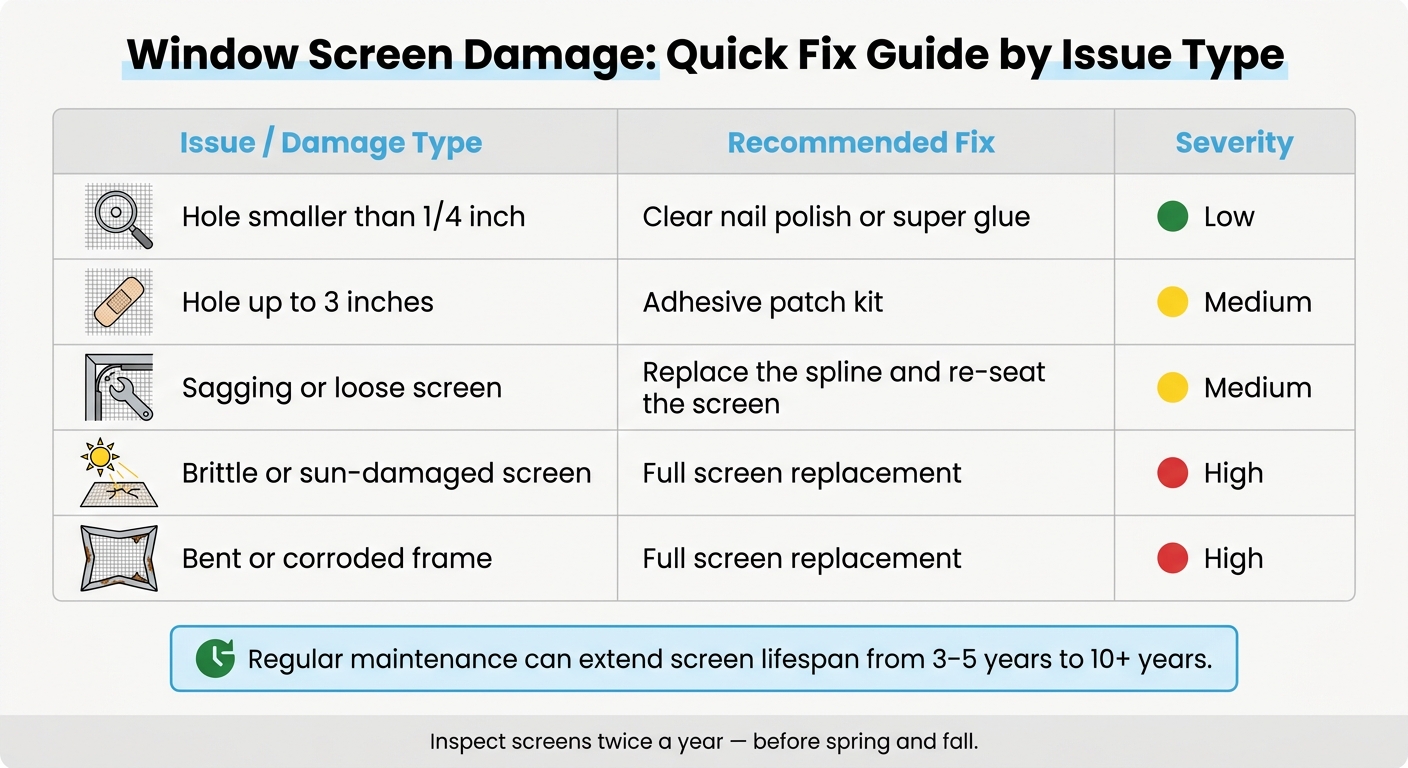
Window Screen Damage: Quick Fix Guide by Issue Type
Small screen damage can escalate quickly. What starts as a tiny hole can turn into a major tear, especially with exposure to wind, heat, or daily use [4][7]. Addressing these issues early keeps repairs manageable and cost-effective.
Make it a habit to inspect your screens twice a year—ideally before spring and fall—to coincide with your seasonal window maintenance. Look for punctures, tears, sagging mesh, or brittle spots. Even a quick touch test can help you detect UV damage in its early stages [7]. Regular inspections stop small problems from becoming big headaches.
"A torn screen isn't just ugly. It invites pests, lets in more dust, and can make your air conditioner work harder. Regular maintenance keeps tiny problems tiny." - Arizona Screen Co [7]
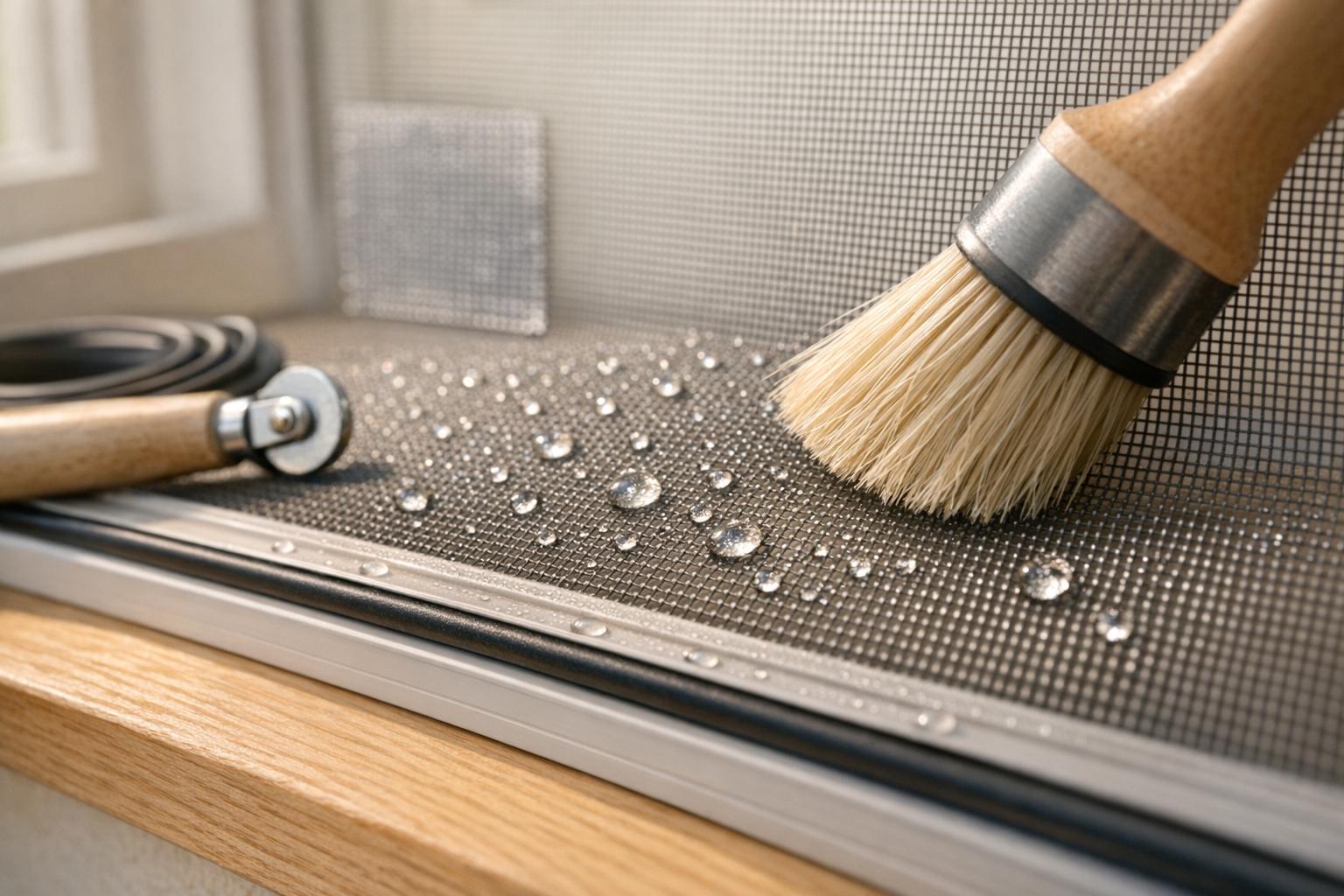
The type of repair depends on the extent of the damage. For holes smaller than 1/4 inch, clear nail polish or super glue works well. For holes up to 3 inches, adhesive patch kits are a better option [4][9][12]. Before applying any fix, clean the area with mild soap and water [10]. If the screen is sagging but intact, you can remove the old vinyl spline, tighten the screen, and secure it with a new spline using a roller tool [7].
Here’s a quick guide to common screen issues and their fixes:
| Issue | Recommended Fix |
|---|---|
| Hole smaller than 1/4 inch | Clear nail polish or super glue [4] |
| Hole up to 3 inches | Adhesive patch kit [9][12] |
| Sagging or loose screen | Replace the spline and re-seat the screen [7] |
| Brittle or sun-damaged screen | Full screen replacement [7][9] |
| Bent or corroded frame | Full screen replacement [7][9] |
If the screen feels brittle all over or the frame is bent, patching won’t cut it - it’s time for a full replacement [7][9]. As Raleigh Screen Solutions explains, "Catching these signs early means you can fix issues before they require major interventions" [10]. Staying on top of repairs is a key part of keeping your screens in good shape.
3. Shield Screens from Weather and Impact
After addressing gentle cleaning and timely repairs, it's crucial to protect your screens from harsh weather and physical damage. Weather can be one of the toughest challenges for window screens. Strong winds often carry fine dust and sand, which can gradually wear down the mesh over time [13]. Heavy rain, snow, and ice can distort frames and weaken materials, particularly on older or lightweight screens. This makes it essential to select durable materials and take precautions against physical impacts.
When storms or high winds are expected, consider removing vulnerable screens to avoid bending or other damage [4].
Choose the right materials for your climate. For hot areas, vinyl-coated fiberglass resists UV rays effectively, while aluminum or marine-grade stainless steel is better suited for humid or coastal regions to prevent rust [4][13]. Applying a UV-protectant spray twice a year can also help preserve the mesh's durability [13].
Physical impacts can be just as damaging. Scratches from pets, kids bumping into screens, or furniture placed too close to windows are common causes. If you have pets, consider pet-resistant screens made of vinyl-coated polyester. These are up to seven times stronger than standard fiberglass and can withstand significant pressure without tearing [5]. For ground-floor windows or high-traffic areas, screen guards or grilles provide an extra layer of protection against accidental contact. Retractable screens are another practical choice - they roll away when not in use, shielding the mesh from both weather and physical damage.
Taking these steps to protect your screens ensures they stay in good shape and sets the foundation for proper off-season storage.
4. Store Screens the Right Way During the Off Season
Storing your screens correctly during the off season is just as important as cleaning and repairing them. This step ensures they remain in good condition and last longer, ready for use when warmer weather returns.
Start with a thorough cleaning and drying process. Begin by removing any debris, then gently wash the screens using mild soap and warm water. After washing, make sure they are completely dry - this step is critical to avoid mildew or mold forming during storage.
Label each screen to simplify reinstallation. Use painter's tape and a marker to identify the corresponding window for each screen. Even small differences in screen sizes can make reinstallation tricky, so labeling helps ensure everything fits perfectly when spring arrives.
"To help your screens last for years, it's a good idea to remove them during the harsh winter months. Label each screen so you know what window it goes in, then store them in a cool, dry place away from direct sunlight and extreme temperatures."
Store screens upright to avoid damage. Keep them standing between flat boards or in designated hanging storage bags to prevent bending or warping. Avoid leaning them against walls or stacking them, as this can lead to holes or misshapen frames if they’re bumped or pressed by sharp objects. Chris Grayson from Clear Wave LLC shares this advice:
"Store the removed screens upright between flat boards or in hanging storage bags made for screen panels. Cover with an old sheet to prevent dust. Leaning them against walls or stacking them causes warping, bending, or holes if something sharp bumps them."
- Chris Grayson, Clear Wave LLC [11]
Finally, choose the right storage location. An indoor spot like a closet, basement, or utility room is ideal. Avoid damp garages or outdoor sheds, as humidity and temperature swings can damage the screens. Cover them with a sheet to keep dust and pests away.
5. Keep Window Frames and Tracks Clean
While cleaning your screens is important, don't forget about the window frames and tracks. These parts play a big role in how well your screens function. Surprisingly, dirty window tracks are a leading cause of screens loosening, warping, or not fitting properly over time. As Beak Buster Window Cleaning notes:
"Debris in tracks is one of the maintenance issues that leads to window damage over time." [14]
When tracks are clogged with debris, screens become harder to slide, which can eventually bend or warp the frame. [4] To avoid this, aim to clean your frames and tracks at least twice a year - spring and fall are ideal times.
The cleaning process is simple. Start by vacuuming the tracks with a soft brush attachment. [1] Avoid using water until after vacuuming, as moisture can turn debris into mud. [1] Next, use a toothbrush to scrub tight corners and follow up with a damp microfiber cloth and mild dish soap to remove any lingering residue. Clean tracks not only help screens move smoothly but also ensure they stay securely in place.
Once the tracks are clean and dry, apply a silicone-based lubricant to keep the screens sliding effortlessly. Steer clear of oil-based products like WD-40, which can attract dust and create buildup. As Arizona Screen Co. advises:
"Spray a silicone lubricant on sliding tracks - not WD-40; that can gum up screens." [7]
Craig Thomas, a Virtual Expert at Frontdoor, also adds:
"Vacuum out the screen grooves around the window to clean out any dirt and insects that may have gotten trapped throughout the year." [8]
Vacuuming these grooves ensures the screens sit evenly in their frames, reducing wear and tear on the mesh edges. By sticking to this routine, you can significantly extend the life of your screens - from the standard 3–5 years to over a decade. [5]
For those in the Greater Charlotte, NC area, Window Cowboy offers professional services to clean window frames and tracks, helping your screens stay in top shape. Taking care of these essential elements ties together all aspects of screen maintenance discussed in this guide.
Conclusion
Taking care of your screens with just a few simple habits can help you avoid expensive repairs or replacements. These small efforts not only protect your investment but also make long-term maintenance much easier.
By sticking to a regular care routine, you can extend the lifespan of your screens from the typical 3–5 years to over 10 years, which can save you a significant amount of money in the long run [5]. As Simonton Windows wisely advises:
"It's always less expensive to clean your screens than it is to replace them, so save yourself some money and take the time to take care of those screens." [2]
If you'd rather leave the job to the pros, homeowners in the Greater Charlotte, NC area - including Lake Norman, Mooresville, Hickory, Rock Hill, and Lake Wylie - can rely on Window Cowboy. Their team uses advanced cleaning tools and conducts detailed inspections to ensure your screens are spotless, functional, and ready to go. As they put it: "By thoroughly cleaning your screens, we help improve airflow, enhance visibility, and maintain a fresh, clear view from your windows." [15]
Whether you prefer to handle it yourself or bring in experts, staying consistent with these five tips will keep your screens in great shape and save you from unnecessary stress down the road.
FAQs
How can I tell if a screen needs to be fully replaced?
If your window screen has large rips, tears, or holes that a patch kit can't handle, it's probably time for a replacement. Other indicators include noticeable rust, corrosion, cracks in the frame, or a frame that's wobbly and no longer holds tension. While smaller problems like fading or loose mesh can usually be fixed, structural issues or trouble opening and closing the screen are clear signs that a full replacement is needed.
What screen material is best for my climate?
The best type of screen material often depends on the climate where you live. If you’re in a sunny area, solar screens are a great option - they block UV rays and help keep heat out. In regions with frequent rain, aluminum or rust-resistant frames can protect against moisture damage. For areas prone to storms, reinforced security screens provide added durability. And if you’re near the coast, stainless steel mesh is a smart choice, as it stands up well to salt exposure. To keep your screens in top shape, Window Cowboy offers professional cleaning services tailored to any screen material.
What’s the best way to protect screens from pets?
If your furry friends love pawing or scratching at your window screens, there are a few ways to keep them safe and your screens intact. One option is to upgrade to pet-resistant screens. These are often made from tougher materials like PVC-coated polyester or aluminum, making them harder for pets to damage.
Another effective solution is installing metal screen guards or kick plates. These create a physical barrier, preventing your pets from making direct contact with the screen.
Here are some additional tips to protect your screens:
- Trim your pet's nails: Keeping their nails short reduces the chance of accidental tears.
- Provide alternatives: Scratching posts or toys can redirect their attention away from the screens.
- Use deterrents: Herbal sprays or pet-safe repellents can discourage scratching or climbing.
- Rearrange furniture: Move furniture away from windows to limit access to screens.
- Clean regularly: Dust and debris can weaken screens over time, so regular cleaning helps maintain their durability.
By combining these strategies, you can protect your screens while keeping your pets happy and safe.