Our Blog

by Admin
|

Mar 10, 2026
How Professionals Achieve Streak-Free Windows
Want spotless, streak-free windows? Professionals rely on the right tools, techniques, and timing - not expensive products. Here’s the secret:
- Tools: Use a high-quality squeegee with a sharp rubber blade, lint-free microfiber cloths, and distilled water to avoid streaks caused by hard water.
- Solutions: Stick to simple mixtures like vinegar and water, diluted dish soap, or ammonia-free cleaners for residue-free results.
- Technique: Clean in shaded conditions, start with dust removal, apply solutions evenly, and use a squeegee at a 45-degree angle with overlapping strokes.
- Maintenance: Replace squeegee blades every 1–3 months, avoid fabric softeners on microfiber cloths, and keep tools clean for optimal performance.
Avoid cleaning on sunny days, as quick drying can leave streaks. These methods ensure your windows shine every time. For overhead glass, follow our guide on how to clean skylights safely.

Professional Window Cleaning Process for Streak-Free Results
How To Clean Windows Like a PRO | 5 TIPS
sbb-itb-4ae7296
Tools Needed for Streak-Free Windows
The secret to spotless, streak-free windows lies in using the right tools.
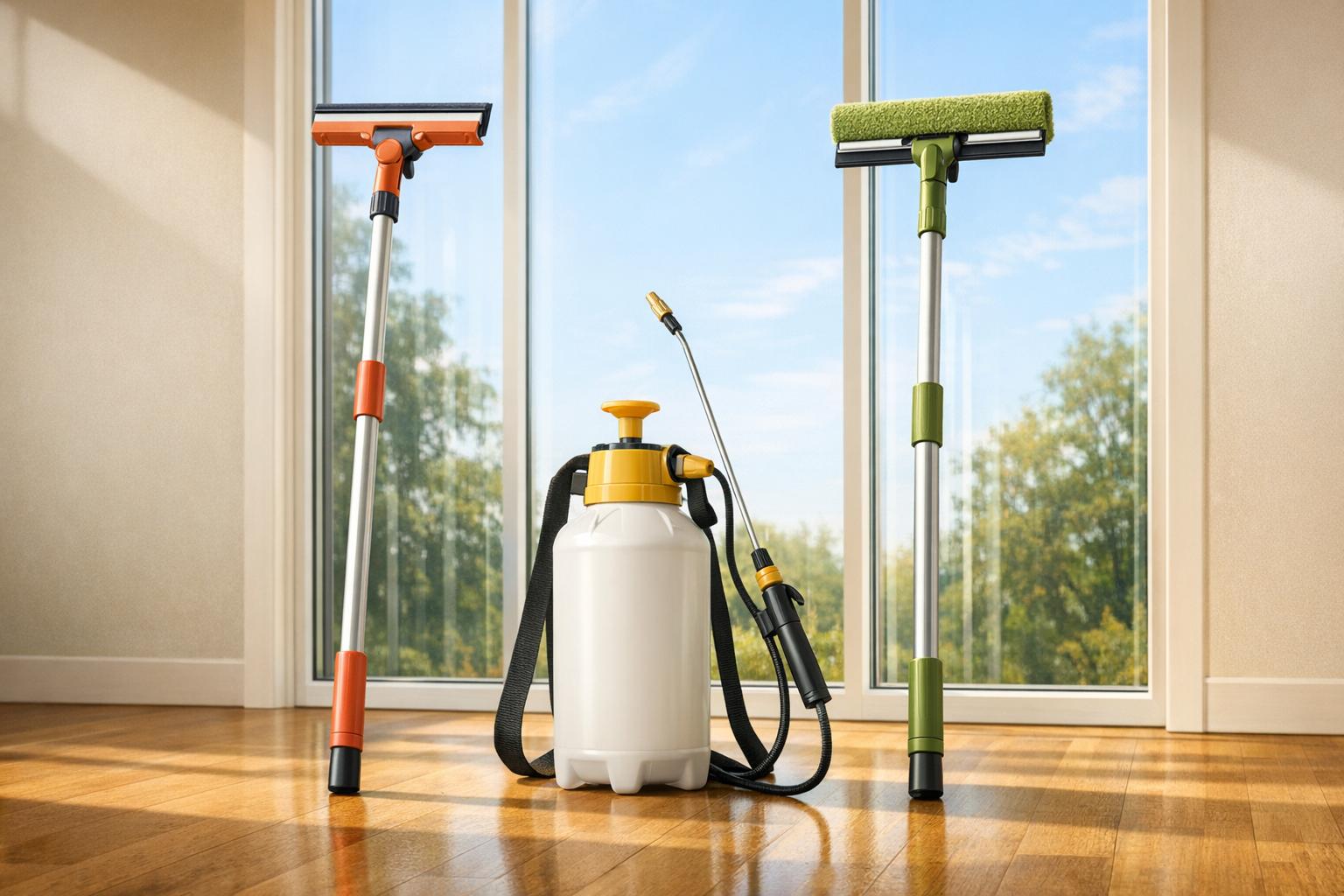
Squeegees and Rubber Blades
A professional-grade squeegee is your best friend when it comes to achieving streak-free glass surfaces [4]. The rubber blade is the star of the show, and it needs to be in perfect condition - sharp, smooth, and free of any nicks. Even a tiny imperfection can leave frustrating streaks or lines on the glass [5]. Reliable brands like Unger and Ettore offer 10–12-inch squeegees priced between $8 and $15 [1]. Tom Morley, a seasoned window cleaning expert, emphasizes:
A high-quality rubber blade ensures even pressure and streak-free cleaning.
To keep your squeegee performing at its best, replace the rubber blade every 1–3 months or sooner if streaks begin to appear. Always wet the blade before use and wipe it dry with a microfiber cloth after each pass to prevent any residue buildup [6]. Pair your squeegee with microfiber cloths for the finishing touch.
Lint-Free Microfiber Cloths
Microfiber cloths are a must-have for detailed cleaning and polishing. Unlike paper towels, which can leave behind tiny fibers, microfiber traps dust and particles effectively [7]. These cloths are highly absorbent, ensuring they remove cleaning solutions completely without leaving a soapy film behind [7]. Professionals also rely on microfiber to clean up edges where squeegees might leave a bit of water [1].
For the best results, fold the microfiber cloth into quarters, giving you eight clean surfaces to work with. Start with a damp cloth to lift dirt and grime, then follow immediately with a dry one to polish the glass to perfection [7]. To avoid mineral streaks, the next step involves using distilled water and the right buckets.
Distilled Water and Cleaning Buckets
Distilled water is a game-changer, especially in areas with hard water [4]. Unlike tap water, which contains minerals that can leave behind deposits as it dries, distilled water ensures a clean, residue-free finish. Professionals often use rectangular buckets designed to fit squeegees and T-bar applicators perfectly, making it easier to saturate tools evenly [5]. These small details can make all the difference in achieving flawless windows.
Cleaning Solutions That Prevent Streaks
Getting glass surfaces spotless often comes down to the cleaning solution you use. Professionals stick with simple, effective mixtures that dry quickly and leave no residue. Here are three tried-and-true solutions that help prevent streaks.
Vinegar and Water Mixtures
White vinegar is a go-to for many pros because its acidity breaks down mineral deposits like calcium and magnesium [9]. Unlike commercial cleaners, which often leave behind a thin film from surfactants and additives, vinegar evaporates cleanly [2][8]. The U.S. Geological Survey explains:
The acidity in vinegar allows minerals from hard water to be washed away completely.
For everyday cleaning, mix equal parts white vinegar and distilled water. If tackling grease or cooking residue, add a teaspoon of dish soap to the mix [9]. This DIY solution costs about $5, a budget-friendly alternative to commercial cleaners priced between $5 and $15 [8].
Ammonia-Free Glass Cleaners
Ammonia-based products can sometimes leave a residue that streaks when hit by light [2][11]. Ammonia-free cleaners avoid this issue and are safer for tinted windows, wooden frames, and indoor air quality. Kirsten Hochberg, a Senior Clinical and Scientific Affairs Specialist at CloroxPro, points out:
While ammonia-based cleaners are safe when used as directed, it can provide peace-of-mind to facility managers to find a glass cleaner that is made with ingredients that pose fewer risks related to accidental mixing, skin contact, or inhalation.
To find an effective ammonia-free option, check for the EPA Safer Choice seal on the label. These cleaners meet rigorous performance standards and align with professional cleaning practices [10].
Diluted Dish Soap for General Cleaning
A few drops of mild dish soap, like Dawn, mixed into a gallon of water makes an excellent all-purpose glass cleaner. Professional window cleaner Justin Orloff shares:
Professional window cleaners don't rely on expensive products... they use a few drops of dish soap in a bucket of water.
This solution cuts through grease and fingerprints while giving your squeegee the "slip" it needs to glide smoothly [2][8]. The trick is to use just a tiny amount of soap - if the water gets foamy, you've added too much, which can leave a hazy film on the glass [2][1]. This method is both cost-effective and highly efficient for removing dirt and grime.
How to Clean Windows Without Streaks
Getting streak-free windows isn’t just about choosing the right cleaning solution - it’s all about the technique. Professionals swear by a step-by-step process to ensure every drop of water is removed and no residue is left behind.
Preparation and Dust Removal
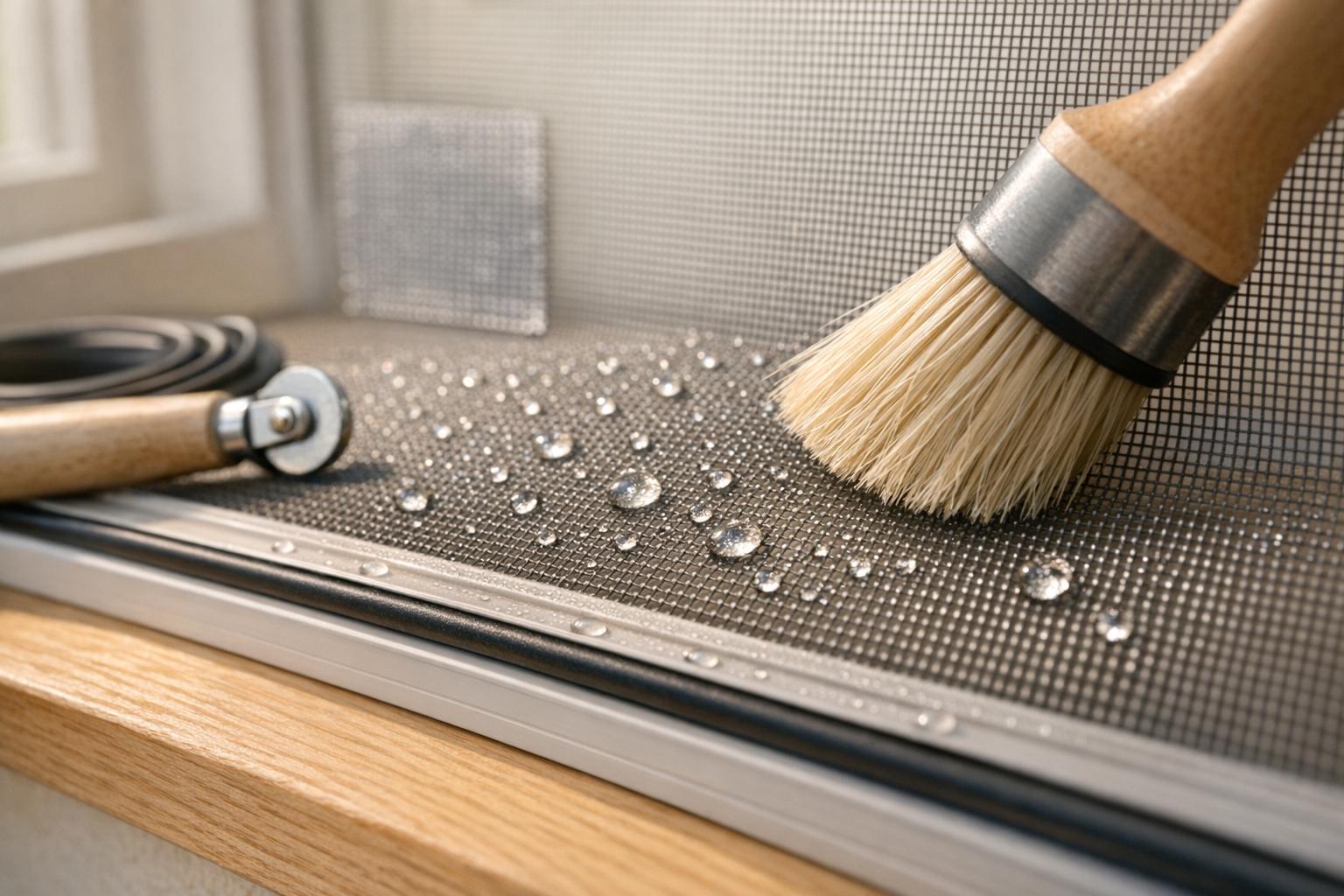
Before you even think about spraying cleaner on the glass, start by clearing away dust, dirt, and debris from the frames, sills, and tracks. A vacuum with a soft brush attachment or a dry brush works well for this. Why? Skipping this step can turn dirt into a muddy mess once water is added, leading to smudges or even scratches [4]. For stubborn grime in the tracks, grab an old toothbrush and scrub with soapy water or a vinegar solution. Once everything is clean and dry, you’re ready to tackle the glass itself.
Squeegee Application and Technique
When it’s time to clean the glass, use a microfiber scrubber to apply your solution in an S-pattern. This ensures you cover the entire surface, especially those tricky corners [1]. The real secret, though, lies in how you handle the squeegee. Hold it at a 45-degree angle - a tip straight from professional window cleaner Justin Orloff:
The professional secret? 45 degrees. That's it.
Start at the top-left corner and pull the squeegee down in a single, smooth motion. Overlap each stroke by about an inch and, after every pass, wipe the blade with a dry microfiber cloth to avoid spreading water and dirt back onto the glass [1]. Scott Pine, Founder of Crystal Clear, emphasizes:
You can press hard, we promise you won't bust the window. Pressing is important for the squeegee to work - start in the corner, pull, and let it glide.
Final Polishing and Inspection
Once the majority of the water is removed, it’s time to polish and inspect. Use a dry microfiber cloth to wipe along the edges and bottom sill where water tends to collect [1]. If you spot any faint streaks, buff them out using a circular motion with a clean microfiber cloth or chamois [4]. To catch any missed spots, step back about 3–4 feet and view the window from an angle [1]. Here’s a pro tip: clean the inside of the window with horizontal strokes and the outside with vertical ones. That way, if you see a streak, you’ll know which side needs another pass [3].
Professional Tips for Better Results
Looking for streak-free windows that stay spotless longer? Whether you are tackling interior window cleaning or exterior glass, these These advanced strategies, used by professionals, can take your window cleaning game to the next level.
Clean in the Shade
Direct sunlight might seem like a great time to clean windows, but it can actually cause more streaks. Why? Cleaning solutions dry too fast under the sun, leaving behind marks. Instead, aim to clean in the shade or during cooler parts of the day, like early morning or late evening. Overcast days are also ideal for keeping your cleaning solution effective for longer.
Use Distilled Water in Hard Water Areas
If you're dealing with hard water, tap water might be working against you. It often contains minerals like calcium and magnesium that leave behind white spots or a cloudy residue when they evaporate. Distilled water, which has these minerals removed, is a simple fix. Mix equal parts distilled water and white vinegar for a powerful cleaning solution - this combo is effective and affordable, with a $1 bottle of distilled water lasting through more than 10 windows [2].
For an extra streak-free finish, use tap water for the main cleaning but switch to distilled water for your final squeegee pass. This step helps eliminate any lingering mineral deposits.
Care for Tools and Materials
Taking care of your tools is just as important as using the right techniques. For instance, replace your squeegee's rubber blades every 1–3 months, or sooner if they show signs of wear. Kärcher International offers this handy tip:
Turn the squeegee once so that both sides can be used. [12]
When it comes to microfiber cloths, skip the fabric softeners - they can leave a residue that reduces absorbency and causes streaks. Instead, air-dry them or use a low-heat tumble-dry setting. Keeping your tools in good condition ensures they perform their best and extends their lifespan.
Conclusion
Getting streak-free windows takes a mix of the right tools, smart techniques, and good timing. Using high-quality rubber-blade squeegees, lint-free microfiber cloths, and simple cleaning solutions - like dish soap mixed with water or a 1:1 vinegar solution - can help you achieve professional results. Start by prepping properly: clear dust from frames, tracks, and sills. Work in shaded areas to avoid quick drying, and use smooth, overlapping squeegee strokes with firm pressure. As Carolyn Forté emphasizes, using plenty of cleaner is key to breaking down and lifting dirt effectively [3]. Don’t forget to maintain your tools - wipe the squeegee blade after each stroke and replace it if it shows signs of wear.
Whether you’re tackling the job yourself or hiring professionals, these strategies deliver clear, long-lasting results. If you’re in areas like Charlotte, NC, Lake Norman, Mooresville, Hickory, or even parts of South Carolina like Rock Hill and Lake Wylie, Window Cowboy offers expert services. They use advanced cleaning technology to keep windows clear up to six times longer than standard methods [13]. Their offerings include exterior and interior window cleaning, along with screens, tracks, skylights, and solar panels.
With these tips, streaky windows become a thing of the past. It’s all about the details - and now you’re equipped with the know-how to achieve that professional, spotless finish.
FAQs
Why do my windows still streak after cleaning?
Streaks often happen because of simple missteps, like choosing the wrong cleaning products, using too much soap, or cleaning under direct sunlight, which speeds up evaporation. To get streak-free results, try cleaning on cloudy days, stick to a small amount of dish soap mixed with water, and use the right tools - like a squeegee and microfiber cloths - to prevent residue or lint.
What’s the easiest pro squeegee method to learn?
The zig-zag or S-pattern is one of the easiest professional squeegee techniques to master. Begin at the top corner of the window and guide the squeegee in a smooth S-shape. Make sure to overlap each pass slightly to avoid missing any spots. Keep the blade angled downward, apply steady pressure, and wipe the blade with a clean cloth after every pass. This approach helps ensure even coverage and leaves the window streak-free.
When should I hire Window Cowboy instead of DIY?
When you want spotless, streak-free windows - especially for those tricky-to-reach or multi-story ones - hire Window Cowboy. Professionals bring the right tools and techniques to the job, avoiding the streaks and smudges that often come with DIY attempts. It’s a smart choice if your windows deal with regular dirt buildup or if cleaning them yourself feels unsafe due to height or difficulty. Let the experts handle it, saving you time, effort, and ensuring your windows get the care they deserve.